
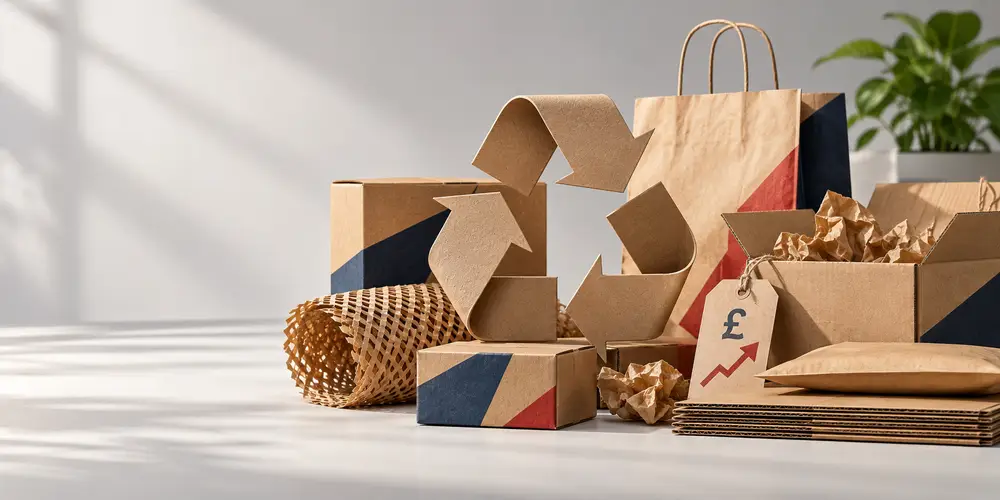
Packaging costs are changing again. Between the Plastic Packaging Tax, the new Extended Producer Responsibility (EPR) fees and the bottle and can deposit scheme coming in 2027, there is a lot for businesses to keep track of. Here is a plain-English round-up of what is happening and what it could mean for you.
1. Plastic Packaging Tax has gone up
From 1 April 2026 the Plastic Packaging Tax rose to £228.82 per tonne (up from £223.69). It applies to plastic packaging containing less than 30% recycled content, and businesses that make or import 10 tonnes or more of plastic packaging a year need to register with HMRC.
Two further changes are due in April 2027: only post-consumer recycled plastic will count towards the 30% (factory offcuts will no longer qualify), and chemically recycled plastic will be able to count using a ‘mass balance’ approach. If you are relying on recycled content to stay under the tax, it is worth checking your supplier’s certification now.
2. EPR fees now depend on how recyclable your packaging is
Extended Producer Responsibility makes businesses pay towards the cost of collecting and recycling the packaging they put on the market. It applies to organisations with a UK turnover of £1 million or more that handle more than 25 tonnes of packaging a year.
From the 2026–27 year, fees are being ‘modulated’: packaging is rated green, amber or red depending on how recyclable it is. Red-rated packaging pays 1.2 times the base fee in 2026–27, rising to 1.6 times in 2027–28 and 2 times in 2028–29. The first modulated invoices are expected in the second half of 2026.
3. Bottles and cans: the deposit return scheme is coming
A deposit return scheme for drinks containers is due to launch in October 2027. In England, Scotland and Northern Ireland it will cover single-use plastic (PET) bottles and steel and aluminium cans from 150ml to 3 litres. Wales is also including glass bottles.
Shoppers are expected to pay a small deposit – around 20p – which they get back when they return the empty container. Retailers will host return points, and drinks producers will need to register their products and label them for the scheme.
What this means for your packaging
The good news is that small changes can make a real difference to what you pay:
- Choose easily recyclable materials – single-material (mono-material) packs usually score better than mixed laminates.
- Look at recycled content – packaging with 30% or more recycled plastic avoids the Plastic Packaging Tax.
- Consider paper and card alternatives where they suit your product.
- Right-size your packaging – less material means lower fees and lower shipping costs.
- Plan ahead for 2027 if you sell drinks or run a shop that will need to take returns.
Talk to Woldpac
We have been helping businesses find the right packaging since 1984, and we are happy to review what you use now and suggest cost-effective, more recyclable alternatives – from carrier bags and mailers to boxes and specialist packaging.
Call 01483 229184, text 07816 670760 or email [email protected].
This article is a general overview, not legal or tax advice. For the latest official guidance see GOV.UK – Plastic Packaging Tax and GOV.UK’s guidance on packaging EPR and deposit return schemes.